
Now Reading: Preserving Paradise: The Urgent Fight to Protect BVI’s Natural Heritage
-
01
Preserving Paradise: The Urgent Fight to Protect BVI’s Natural Heritage


Preserving Paradise: The Urgent Fight to Protect BVI’s Natural Heritage

Visitors come to the British Virgin Islands chasing paradise, and they find it. It’s hard to miss while sailing in crystal-blue waters, passing islands that seem to float gracefully on the sea. But take a closer look: the BVI is part of the Caribbean Biodiversity Hotspot, a region with over 8,500 endemic species found nowhere else, making it one of the most biologically rich and ecologically important areas on the planet.
Before European exploration of the West Indies in the late 1400s, Indigenous societies had already been shaping island landscapes by relocating species of plants and animals throughout the region, from South America to the islands, for food, tools, and daily needs. Later, European settlers introduced even more species from across the Atlantic, including coconut palms (Cocos nucifera), sugar cane (Saccharum officinarum), and cattle. Beef Island was named after the livestock raised there.
Despite centuries of change, many native species have survived and adapted, creating a living mosaic of rich and diverse ecosystems. While Anegada is made of coral and limestone, most of the BVI are volcanic in origin. Across the islands and surrounding waters, habitats include tropical dry and upland evergreen forests, xeric shrublands, coastal dunes, mangrove wetlands, salt flats, seagrass meadows, coral reefs, and pelagic zones in the open ocean. Today, the BVI hosts a unique mix of native, endemic, and naturalised species. This biodiversity, on land and in the sea, is shaped by geology, topography, rainfall patterns, centuries of human activity, and ecological exchange. Ongoing research shows there are about 30 endemic species of flora and fauna found nowhere else on Earth.
In 2018, a collaborative team from the Royal Botanic Gardens, Kew, and the National Parks Trust of the Virgin Islands identified 18 Tropical Important Plant Areas (TIPAs) across 13 islands, encompassing 35 nationally listed plant species of conservation concern. Central Virgin Gorda has the highest species richness, with 17 plants of conservation concern, including the endangered St. Thomas Prickly-Ash (Zanthoxylum thomasianum) and the critically endangered Kiaerskovii Lidflower (Myrcia neokierskovii), also found in Sage Mountain National Park on Tortola.
These TIPAs not only protect rare plants but also encompass habitats vital for the survival of unique animals. The endangered Virgin Islands Coqui (Eleutherodactylus schwartzi), a small frog native to the BVI, plays a crucial role in dry forest ecosystems. Similarly, the endangered Virgin Islands Dwarf Sphaero (Sphaerodactylus parthenopion), one of the tiniest known vertebrates, is native to Virgin Gorda, Tortola, and Moskito Island, where it inhabits dry shrublands.
Anegada hosts the highest endemicity in the BVI, with at least five species, including the butterfly Calisto anegadensis, critically endangered plants such as the Wire Wist (Metastelma anegadense) and Poke-me-boy (Acacia anegadensis), and reptiles like the elusive Anegada Skink (Spondylurus anegadae) and the island’s beloved Anegada Rock Iguana (Cyclura pinguis).
The BVI also supports important breeding populations of seabirds, including Roseate Terns (Sterna dougallii), Royal Terns (Thalasseus maximus), and Brown Pelicans (Pelecanus occidentalis). However, recent surveys show widespread declines, with Red-footed Boobies (Sula sula) now extirpated from the Territory.
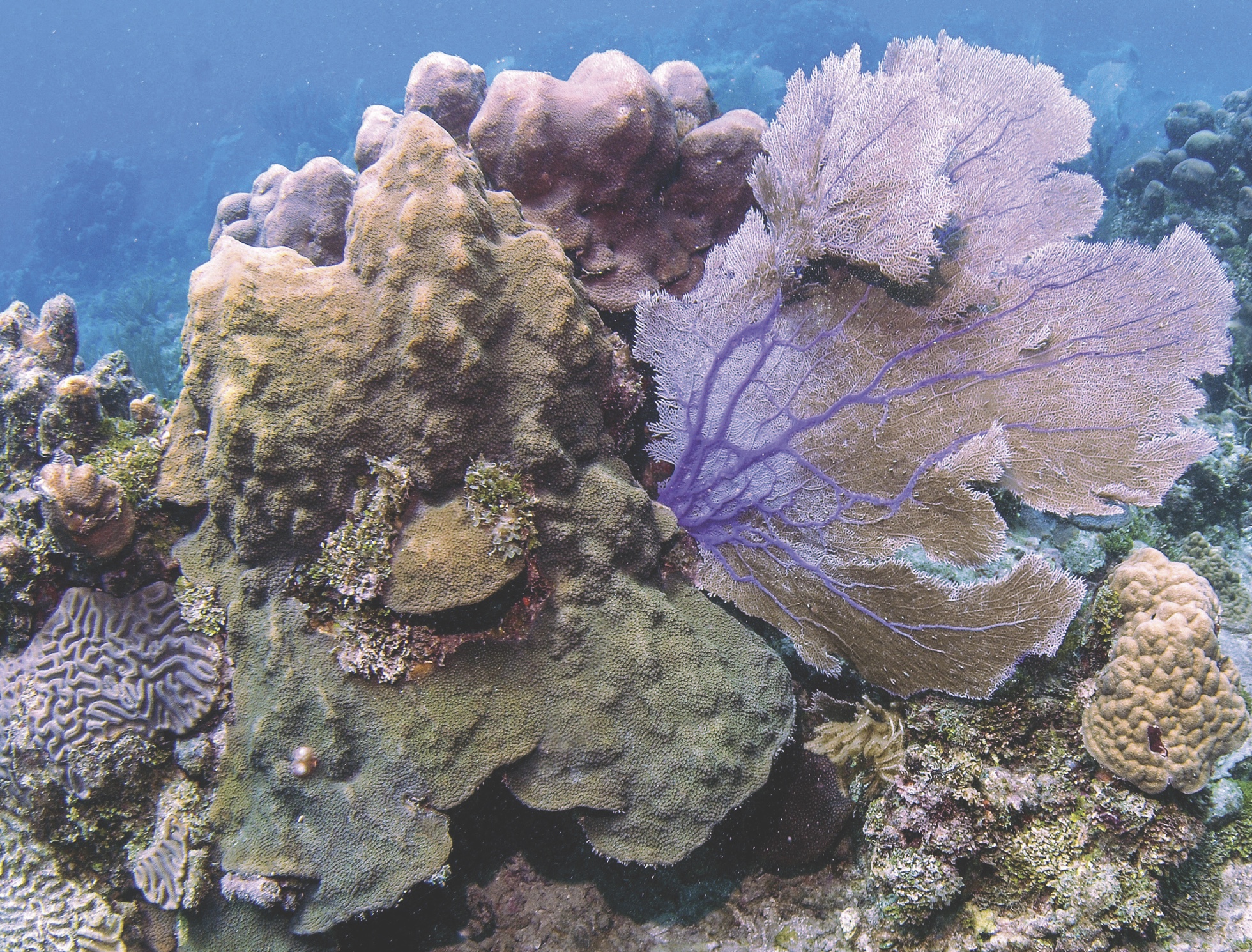
Offshore ecosystems are equally vital. The BVI Territorial Sea extends 12 nautical miles, while the Exclusive Economic Zone (EEZ) reaches up to 200 nautical miles, encompassing approximately 80,000 km² of marine waters. Though no marine species are known to occur solely within BVI waters, over 500 species of fish, including critically endangered Nassau (Epinephelus striatus) and Goliath groupers (Epinephelus spp.), live here. Over 65 stony corals exist, including critically endangered Elkhorn and Staghorn corals (Acropora spp.), and endangered Star corals (Orbicella spp.). At least 22 species of marine mammals, including humpback whales (Megaptera novaeangliae) and sperm whales (Physeter macrocephalus), migrate through during winter and early spring, with bottlenose dolphins (Tursiops truncatus) frequently observed nearshore. Since 2022, sightings of an Antillean manatee (Trichechus manatus manatus), an endangered subspecies found in Puerto Rico, have been recorded in BVI waters. To protect these species and their habitats, there are 14 declared marine protected areas, including one marine park and 13 fisheries protected areas, managed by the National Parks Trust of the Virgin Islands and the Department of Agriculture and Fisheries.


But paradise, as it turns out, is vulnerable.
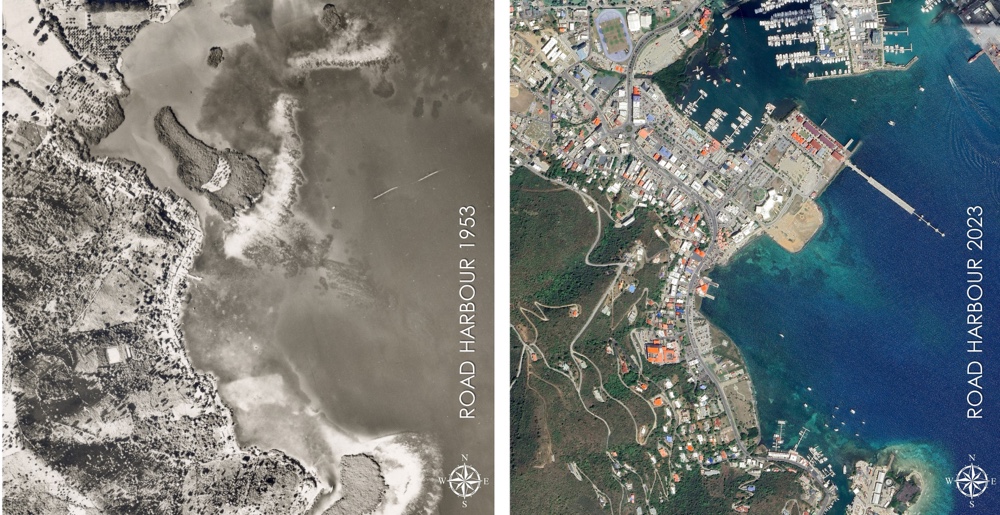
The BVI’s terrestrial ecosystems face mounting threats from land use change, invasive species, and habitat fragmentation. On Tortola alone, mangrove cover has declined by nearly 50% due to coastal development and land reclamation since the 1950s. A post-hurricane assessment found that at least 90% of mature red mangrove trees across the Territory were defoliated or dead following Hurricanes Irma and Maria. These forests are critical for carbon storage, flood mitigation, and biodiversity, but their degradation undermines the resilience of both human and ecological communities. Invasive plants such as Wild Tamarind (Leucaena leucocephala) and animals like the green iguana (Iguana iguana) further disrupt native habitats, threatening endemic species and altering nutrient cycles.
Marine biodiversity in the BVI is under severe stress from overfishing, pollution, invasive species, and climate change. Coral reefs, among the most biologically rich ecosystems in the region, have suffered dramatic losses. Studies show that coral cover in the BVI declined by more than 60% after the 2005 mass bleaching event due to rising ocean temperatures. Disease outbreaks, anchor damage, and algal overgrowth have also accelerated reef degradation. Invasive lionfish (Pterois volitans and P. miles), introduced accidentally to the region, now outcompete native fish and disrupt food webs. Overexploitation of fisheries, including ghost traps, further erodes ecological balance. As coral reefs and mangroves decline, the BVI’s natural defences against storms, erosion, and biodiversity loss grow increasingly fragile.
In response to mounting threats, the Virgin Islands launched its first National Biodiversity Strategy and Action Plan in 2025, a roadmap for conserving and restoring the Territory’s natural heritage. The plan integrates biodiversity into national development, aligning with global goals under the Convention on Biological Diversity and the Sustainable Development Goals.
Nature isn’t just a source of pride; it’s the foundation of the economy. Around 80% of the Territory’s GDP is linked to nature-based activities such as tourism and fishing. Coral reefs alone contribute millions annually through tourism and shoreline protection. Mangroves buffer storm surges, saving
Related Posts

Previous Post
Next Post