
Now Reading: Curing Shifting Baseline Syndrome: A Different Approach for Conservation
-
01
Curing Shifting Baseline Syndrome: A Different Approach for Conservation

Curing Shifting Baseline Syndrome: A Different Approach for Conservation

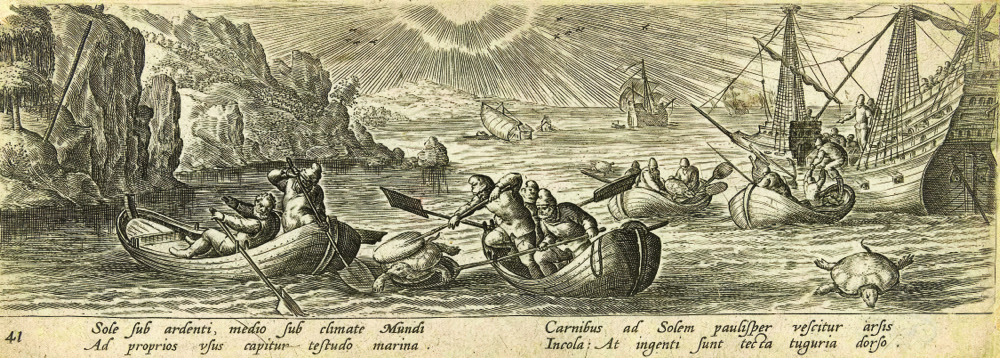
Back in the late 1500s and 1600s, the Caribbean was a treasure trove of marine life. A breathtaking array of large marine vertebrates, such as manatees, monk seals, and sea turtles, once greeted early explorers. However, by the 1800s, their numbers had been decimated in the central and northern Caribbean due to overfishing.


While there is little documented record of manatees and monk seals specifically in the BVI, their existence may have been recognised by how different locations were originally named by early cartographers. The sheltered ‘Sea Cows Bay’, located on the southern shore of Tortola, was once an area with extensive freshwater wells and seagrass beds, a suitable habitat for manatees, often described as a ‘sea cow’. The Seal Dog Islands may have been a haul-out location for birthing seals where they could also be heard barking like dogs. ‘Trunk Bay’ was and still is a sea turtle nesting beach, with ‘Trunk’ being the local name for leatherback sea turtles.
While both foraging and nesting sea turtles still exist in the BVI, their numbers are lower today than they were historically. The closest resident population of manatees, although very low in numbers, is found in Puerto Rico, and the Caribbean monk seal is now extinct. This change or shift in what once existed when the early explorers first came to the Caribbean compared to now has been a gradual but significant decline in the overall health and functionality of the marine environment. This gradual decline, though not always visible, is a cause for immediate and urgent action. We now know that the loss of these keystone species has had a domino effect on the environments where they once lived. The loss of just one species can have a detrimental impact and alter an entire ecosystem.
However, without this knowledge, experience or memory of these past environmental conditions, especially over the past few hundred years, most people will identify the current state of the environment as the ‘baseline’ to compare any changes in the future. However, younger generations will have a very different view of nature compared to older generations. These differences in perception of the natural environment are what is called the shifting baseline syndrome. As time goes on, our expectations of the environment are lowering, and we aren’t even realising what we have lost.
Would raising awareness of how the environment has actually changed over time be enough to improve environmental protection in the future? It’s not a new concept, but historical data isn’t always readily available. However, with a little ingenuity, people have been able to scientifically reconstruct the past, which has helped foresee the future.
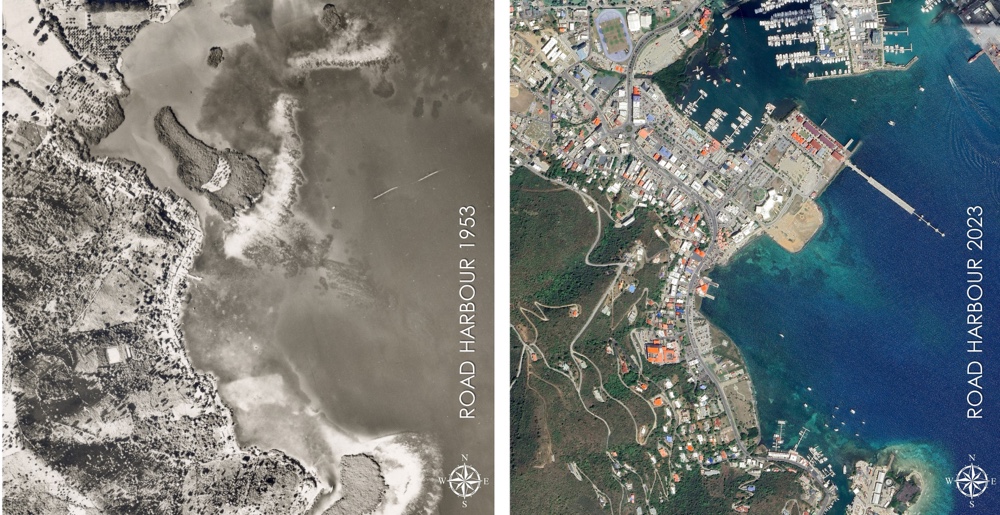
Although the BVI’s environmental history is not well documented, there are some ‘before’ and ‘after’ photos worth 1000 words. Aerial photos taken in the 1940s and 1950s, just before the advent of tourism in the Caribbean, when air travel was literally taking off, compared with recent Google Earth satellite imagery, are the best pieces of evidence to show how our environment has changed within the past 75 years. What would bring these images to life would be to document environmental change from the perspectives of older surviving generations.
Prior to the 1950s, there was very little tourism in the BVI with little means to raise the standard of living. However, neighbouring USVI had already recognised how the sun, sand and sea could be used to grow the economy through tourism. The BVI wasn’t far behind, and in 1953, the Hotel Aids Ordinance was enacted and provided incentives for developers to help build the tourism industry. By 1964, Laurence Rockefeller’s Little Dix Bay, the Territory’s first resort, opened and by 1969, the BVIs first charter company opened. By the mid-1970s, Road Town was almost completely unrecognisable. While economic growth is vital to the country, it comes with a price because, for every action, there is an equal and opposite reaction.
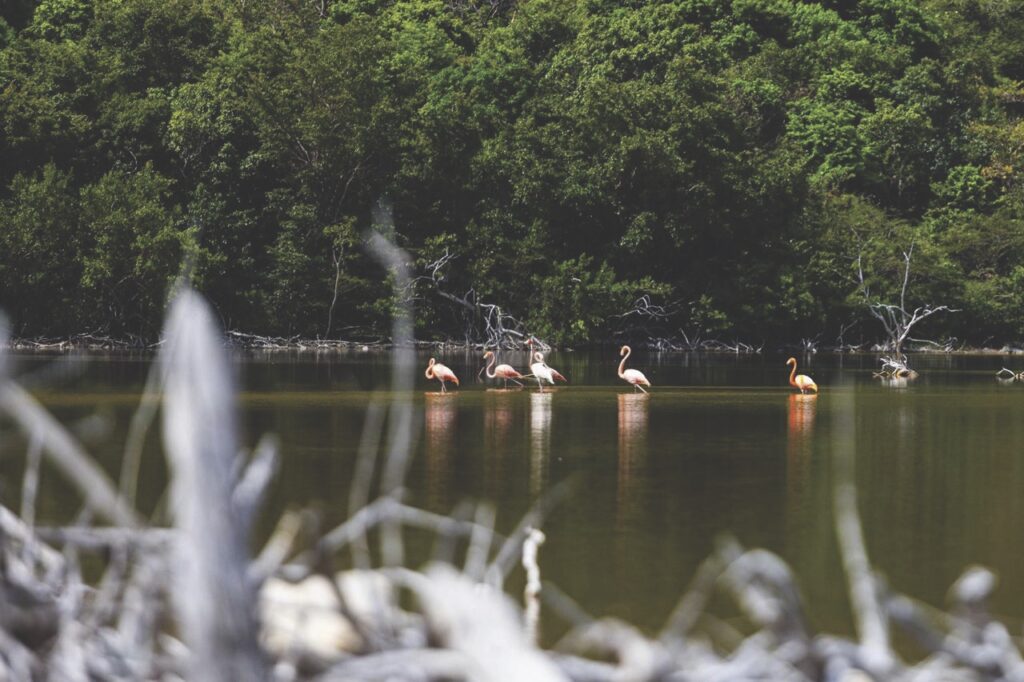
Beach sand was being removed, sold, and exported to the USVI for building materials, as well as used locally. Coastal land and mangroves were being cleared for developments, and all the extra fill was usually thrown into what were thought to be “swamplands,” later recognised as “wetlands.” Some wetlands, like the one in Spanish Town, were dredged and turned into marinas.
The generations that watched this new era of extensive development evolve also saw an incentive to continue the trend because it had resulted in widespread economic growth. It wasn’t until the 1970s that environmental sciences emerged, and scientists began to discover all the adverse impacts people had had on the environment. Processes such as how wetlands mitigate flooding and how mangroves and coral reefs protect the shoreline from high wave energy were new theories that have since been proven over and over.
The next generation would lack the knowledge, experience, or memory of the development and economic boom, and again, the shifting baseline syndrome would strike again. This time, climate change and other environmental threats, such as the introduction of invasive species, would come into play for a future generation to start a new generational ‘baseline’.
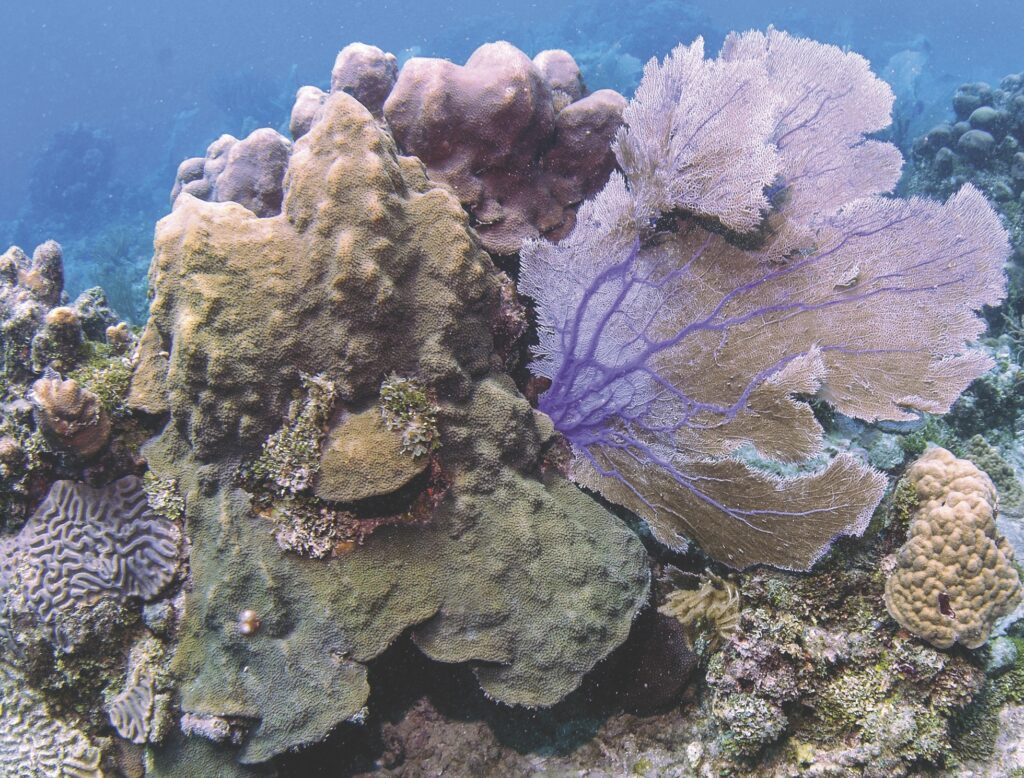
Since 2005, several mass bleaching events from prolonged high water temperatures have resulted in the loss of over 60% of live coral coverage. Winter storms moving into the Atlantic have resulted in several extreme wave events that have accelerated coastal erosion, particularly where mangroves have been removed. The spread of Halophila stipulacea, an invasive seagrass from the Red Sea, has rapidly outcompeted native seagrass, altering once sandy-bottom substrates into grassy beds that have altered entire ecosystems.
This shifting baseline syndrome isn’t just a problem in the BVI; it is happening around the globe. Extraordinary ecological changes have occurred in the past, and with a climate crisis looming, improved conservation and restoration of coastal ecosystems are critically needed, especially in small island states. Investigating what we have lost in the past and raising awareness of these changes might be more effective than simply saying, ‘We need to fix this.’ Besides, history does seem to repeat itself.

Related Posts

Previous Post
Next Post