
Now Reading: Nation Builder – Johnny Khalil Hassan-Selah: From Sports to the Sea A Life of Service, Grit, and Legacy
-
01
Nation Builder – Johnny Khalil Hassan-Selah: From Sports to the Sea A Life of Service, Grit, and Legacy

Nation Builder – Johnny Khalil Hassan-Selah: From Sports to the Sea A Life of Service, Grit, and Legacy


A nation builder is not limited to politicians or leaders. They can be teachers shaping the minds of children, entrepreneurs creating opportunities, volunteers strengthening communities, artists preserving culture, or ordinary citizens who live with integrity and responsibility. Together, their contributions lay the foundation for a stronger, more united, and progressive nation.
The British Virgin Islands has been fortunate to be home to men and women whose lives embody this spirit. Among them stands Johnny Hassan — a man who helped shape sports, built a thriving marine services industry, and mentored generations.
Early Life and Arrival in the BVI
Born in a small village outside Bethlehem, West Bank, Johnny pursued high school in his hometown and later studied Political Science at a University in Lebanon. At just seventeen, he came to the Virgin Islands to visit his brother, with plans to continue to Texas for further studies.
But the “sweet life” of the BVI captured him. Semester after semester, Johnny postponed his return. Eventually, he joined his brother’s general store in Road Town, then took a bold step into the Fire and Rescue Service at Beef Island Airport.
A Short, But Brave Stint in Firefighting
Johnny recalls his time in the Fire Department with both pride and realism. Equipment was limited — just extinguishers, no trucks. “Circumstances were not right to induce anyone to stay,” he remembered. When the first truck arrived from the UK, he recognized how far the department had to go, and soon moved on.
Yet, even in that brief period, Johnny’s willingness to serve reflected his instinct to contribute wherever he was needed.
Building Sports Foundations
Sports became Johnny’s next field of nation building. In 1968, while the Royal Engineers were constructing the first airport runway, Johnny gathered a group to play football on Beef Island. Soon, local players joined, and football began to take root. As he recalls: “That was the first time the BVI had football boots on the island.”
The efforts of Johnny and others transformed the swampy pond owned by the Agriculture Department, that is the A.O. Shirley Recreation Ground we know today. A government-owned bulldozers worked late into the nights, supported by ordinary citizens determined to build a field for the community.
From there, the BVI Football Association was reformed, and momentum carried into regional competition. By the early 1970s, Johnny was also helping track and field grow. In 1975, he led the first BVI team to the Central American and Caribbean Championships in Puerto Rico, a group of teenagers competing against seasoned professionals. A year later, the BVI made its CARIFTA debut in Nassau, Bahamas.
By 1973, Johnny had become President of both the Football and Track and Field Federations — a testament to his energy and leadership.
Laying the Groundwork for Sports Institutions
Johnny’s sports contributions went beyond the playing field. In those early years, the Virgin Islands lacked the formal structure needed for athletes to participate internationally. That began to change when Reynold “Rey” O’Neal and Theda Buckner approached Johnny to help develop track and field, during Rey’s college days. Though football was his strength, Johnny agreed, knowing the territory needed sports to thrive.
Together with dedicated volunteers like John Lewis, A Senior Manager of Cable and Wireless, and others, Johnny helped re-established the BVI Football Association and strengthened track and field. Uniforms and boots were sourced through international catalogues — painstakingly tracked down through Cable and Wireless’ overseas connections, long before fax or internet.
As sports momentum grew, so too did the call for an Olympic presence. With the support of Rey O’Neal (then President of the BVI Olympic Committee), and other government-affiliated officers, the foundations of the BVI Olympic Committee were laid. What began with small, determined steps soon blossomed into full international recognition, allowing the Virgin Islands to field delegations at regional and global events.
“We needed to hit the international scene,” Johnny explained. “That’s how we knew our athletes would grow.”
Pioneering in Marine Services
Alongside sports, Johnny carved out a career in the marine industry, his first job was the launch of the project to develop Village Cay; he knew the contractor Jim Morris personally, who needed a time keeper (accounts clerk) and an officer to deal with clearing goods at Customs. He admits that at that time, he had no previous knowledge of sail boats.
When that contract was wrapping up in Village Cay, with the onset of other contracts in Peter Island and Bitter End; Jim again offered Johnny another job trying to tear him away from this sport interest. Ed Hamilton, an Englishman was trying to start the first charter company in Village Cay, as part owner of Tortola Yacht Charters. Johnny reminded Morrison that he knew nothing about sailboat, and the offer was made to teach him. “I started as a boat cleaner”. Johnny remembers Hamilton with fond memories, he recollects “he was a good teacher I learned a lot from him, including the routes, and the ability to turn around a boat anywhere., anytime. Johnny’s knowledge of boat maintenance increased; and he quickly moved up the ranks to boat briefer. Transferring this knowledge, diagnosis of different mechanical problems on the boat came next, identifying Johnny as someone whose opinions were valued highly. His knowledge expanded to rigging and sails, all within the year, leading to another career change as Dock Manager of Tortola Yacht Club of the now 13-boat fleet. Johnny admits that his love for sailing was slow; but when it manifested, he enjoyed local boat racing. Years after, Johnny recalls Hamilton explaining that he was about to move his boats to Nanny Cay, in anticipation, of the completion of the dock there, and needed some help to carry water in jerry jugs to the boats; again opportunity came knocking and Johnny agreed; in short order he was promoted to Dock Manager, latitude 1825 . Within three years, Johhny had developed a reputation for being one of the best maintenance personnel in the industry. As the industry grew and ownership fluctuated, Johnny rationalized that if he was well known, was working late hour for these companies, it was an incentive to work for himself. So, he stayed in Nanny Cay, set up his own private company and launched out from there. By 1979, Johnny launched Johnny Maritime Services. He worked tirelessly, varnishing boats, managing deliveries, and maintaining fleets. His name became synonymous with trust. “As soon as you said you worked for Johnny, you got a job,” he recalled with pride.
Through this business, Johnny not only built his own livelihood but also trained and mentored countless young BVIslanders. Many went on to become captains, mechanics, and managers across the industry.
Training Captains, Building Futures
One of Johnny’s proudest initiatives was the creation of the captain’s license course in the Virgin Islands — a game-changer for young men aspiring to careers at sea. At the time, opportunities were limited, and many had to travel to St. Thomas to obtain the six-pack license.
Working with Chief Immigration Officer Edmund Maduro, (who spearheaded and championed the program) and in collaboration with the U.S. Coast Guard, Johnny helped secure the necessary books and arranged for the course to be hosted right here in the BVI.
Classes were held in the evenings, beginning at 7:00 p.m. so participants could continue their day jobs. Volunteer lecturers — many of them experienced maintenance managers from the charter industry — gave their time freely, ensuring students received hands-on, practical training.
When the exams were scheduled, officers from St. Thomas traveled over to administer them. The first group of about eight participants all earned their licenses. Some became captains, others managers, and one secured a senior role with The Moorings Ltd. Johnny recalls when his captain license was issued by Mr. Battle-Blake, the Chief Customs Officer at that time.
Although the program eventually waned due to lack of sustained leadership, it remains one of Johnny’s proudest accomplishments — proof of his commitment to creating opportunities for the next generation. Today, he is reassured with the current programs now tabled on the HLSCC training calendar, allowing captains to continue to gain certification and allowing the industry to expand.
Endurance and Legacy
In 2017, Hurricane Irma destroyed much of Johnny’s fleet — 21 boats lost in one storm. But he rebuilt, continuing his work with resilience. “With health and strength, I came out level. Maintenance is still my strong suit. Up to today, I can listen to an engine and tell what’s wrong.”
Today, Johnny Maritime Services stands as a symbol of persistence. More importantly, Johnny’s life reminds us that true legacy lies not just in what we build for ourselves, but in the opportunities, we create for others.
A Nation Builder Worthy of Recognition
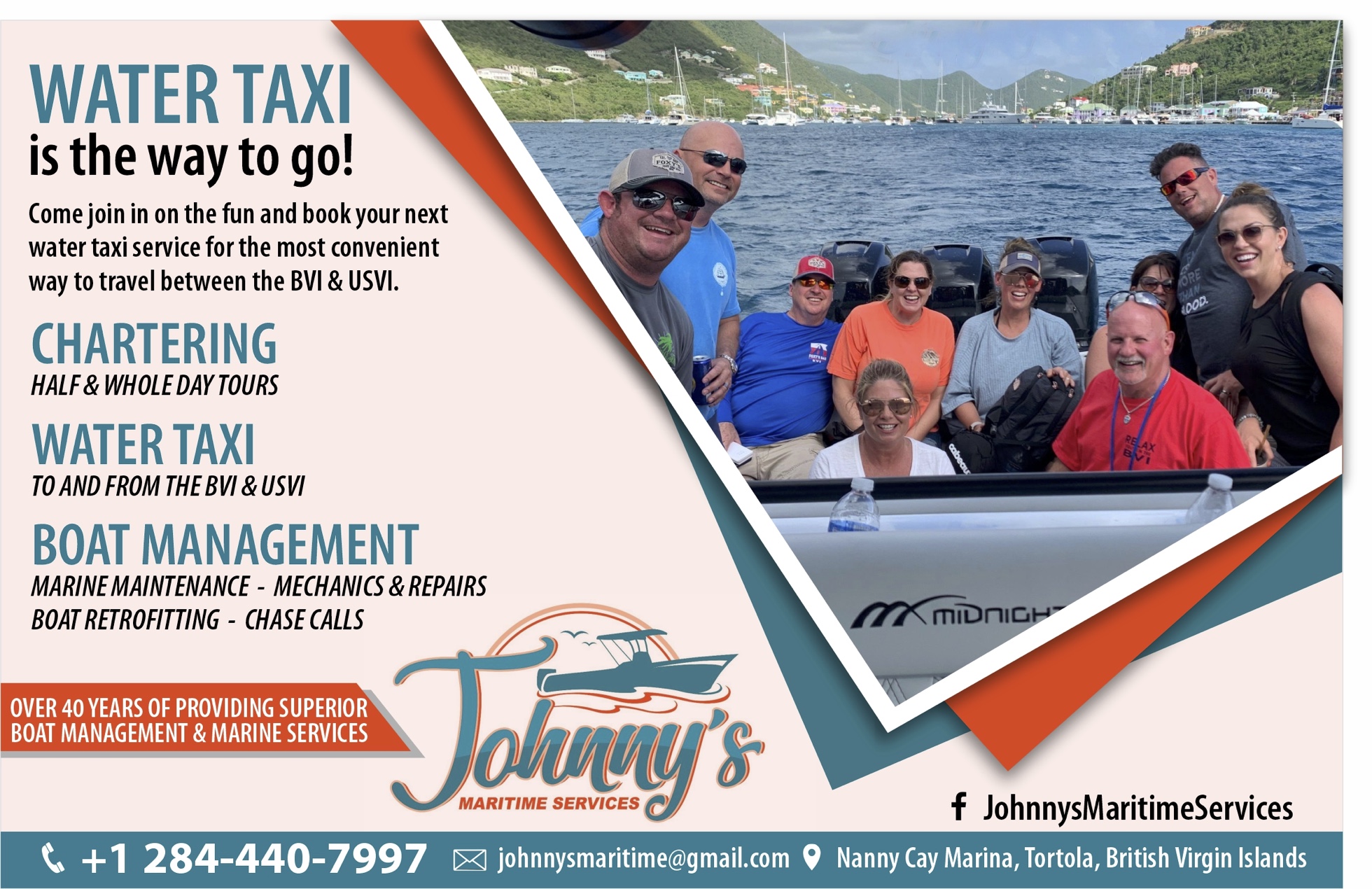
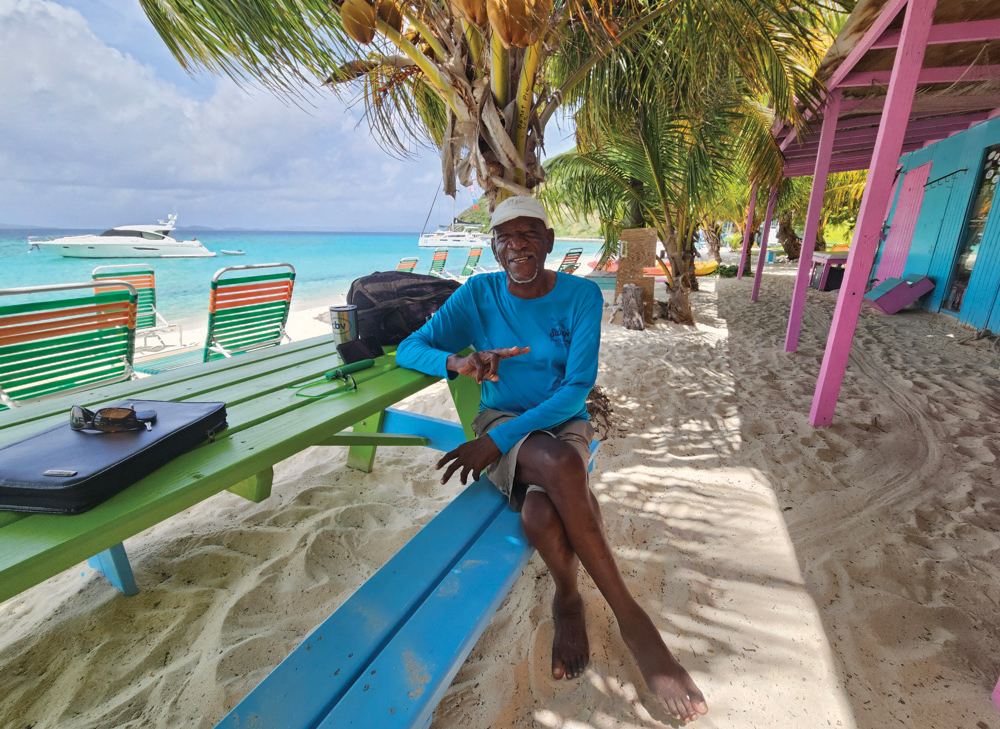
From a teenager who postponed his return home, to a man who became central to football, track and field, and marine services in the Virgin Islands, Johnny Hassan’s story is one of grit, service, and leadership. He is living proof that nation builders come in many forms — firefighter, sportsman, entrepreneur, mentor. His contributions have shaped the BVI we know today, leaving a legacy worthy of the highest recognition. He is still located in Nanny Cay, partnered by his eldest son; and you can interact with him at different times of the day. Today, he proudly boasts services for day charters, water taxi, boat management, blue and yellow code inspections, consultancy on ‘safety at sea”, sea frost refrigeration, air condition, electrical and diesel engine maintenance and generator service. You can contact Johnny’s Maritime Services via email at johnnysmaritime@gmail.com or by phone at +1 (284)543-6257 or +1(284) 494-3663.
Related Posts
Previous Post
Next Post